Some places seem born to be told. Others become iconic precisely because of a gaze, a scene, a story that passes through them. Veneto belongs to both categories.
For decades, this region has been an open-air set, offering an extraordinary range of backdrops: the grandeur of its art cities, the intimacy of Venetian alleyways, the refined geometry of its villas, and the wide-open landscapes of plains and hills. It’s no coincidence that both Italian and international cinema continue to choose it as a privileged setting.
Following these locations means tracing a true cinematic itinerary, where each stop feels like a scene, and every detail a memory waiting to be recognized.
Venice has always been the undisputed star of cinema in Veneto, not just because of its Film Festival, but for its unique ability to embody contrasting moods: romance, mystery, elegance, and spectacle.
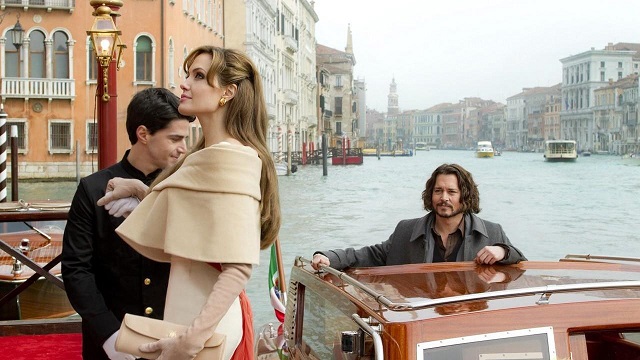
Among the most iconic productions, The Tourist (2010) portrays a sophisticated, highly cinematic Venice, with scenes shot at the Hotel Danieli and the Rialto Fish Market. The latter, active for nearly a thousand years and rebuilt in its current neo-Gothic form in 1907, was transformed into a controlled film set, shot on a closing day to recreate an atmosphere suspended between reality and fiction.
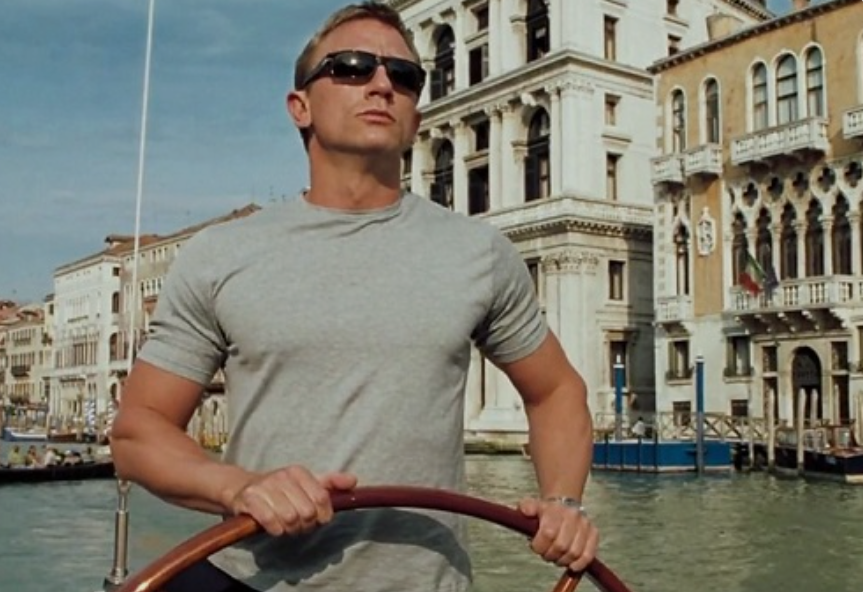
But Venice is also the stage for major film franchises. James Bond has crossed it multiple times, from iconic stays at Hotel Danieli to stops at Caffè Florian, helping to cement the image of luxury and intrigue that still defines the city today.
Its continued relevance as a contemporary set is confirmed by more recent global cinema. In Spider-Man: Far From Home (2019), Venice becomes the first stop on Peter Parker’s European journey: a city explored through gondolas, narrow streets, and iconic landmarks like St. Mark’s Square and the Rialto Bridge, until it suddenly turns into an action scene when a gigantic water creature emerges. Here, the narrative shifts pace, blending the lagoon’s timeless charm with the spectacular aesthetics of Marvel cinema, proving how effortlessly Venice adapts to even the most dynamic modern storytelling.
There’s no shortage of more adventurous takes either, like Indiana Jones and the Last Crusade (1989), which uses the Church of San Barnaba as the fictional entrance to an underground library. The scene where the protagonist resurfaces from a manhole in the square outside has become instantly recognizable, showcasing the city’s ability to transform and reinvent itself on screen.
And then there’s auteur cinema: from Visconti’s Death in Venice to Anonimo Veneziano, and The Merchant of Venice (2004), which depicts a lagoon shaped by trade, alleyways, and historical memory, from the Ghetto to the banks of the Grand Canal.
Padua offers a different cinematic face of Veneto, more intimate and everyday. It’s here that Bread and Tulips (2000) by Silvio Soldini takes shape, turning the city into a welcoming, almost timeless space, perfect for telling a story of escape and rediscovery.
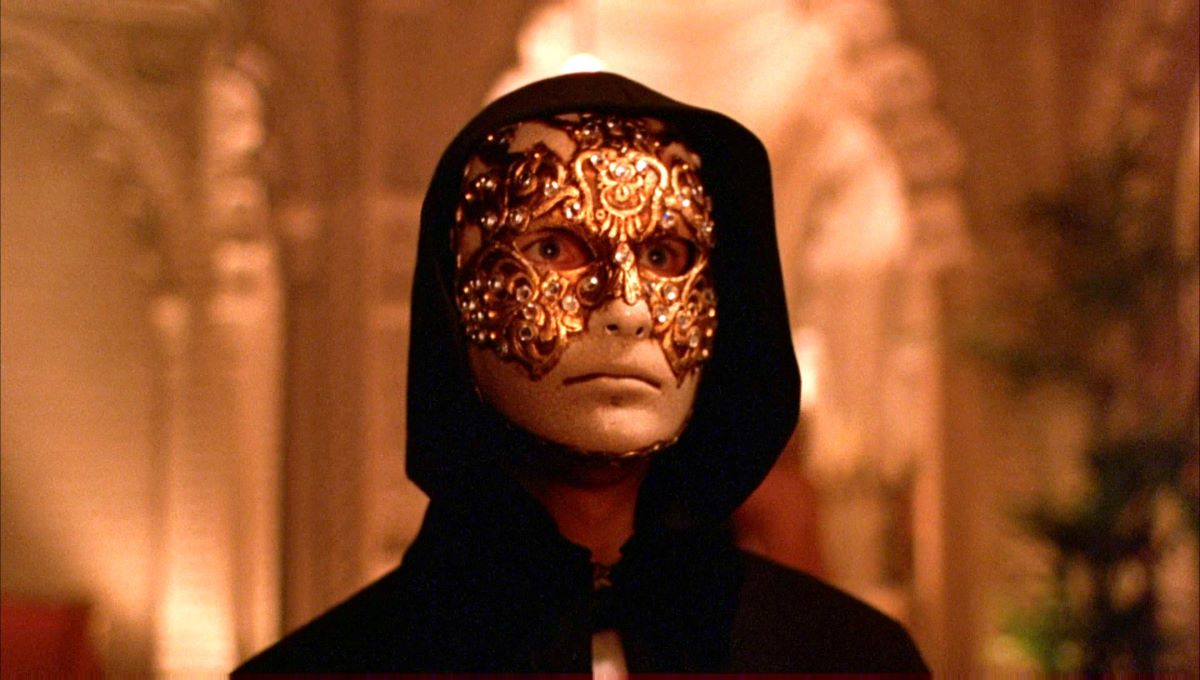
Nearby, the Venetian Villas provide entirely different settings. Their elegant, secluded architecture has often been chosen for more enigmatic and refined atmospheres. A striking example is Stanley Kubrick’s Eyes Wide Shut (1999): although most scenes were shot elsewhere, many of its iconic visual elements, such as the famous masks, originated in Venice, crafted by local artisans, contributing to that suspended aesthetic between reality and mystery.
This connection between territory and cinema shows how Veneto is not just a backdrop, but also a source of visual and cultural inspiration.
The Treviso area has long told a quieter Italy, shaped by relationships, irony, and familiar landscapes. This is evident in The Birds, the Bees and the Italians (1966) by Pietro Germi, which uses Treviso as the setting for a sharp portrayal of Italian society.
Today, this bond continues with contemporary productions. The film Le città di pianura (2025) by Francesco Sossai crosses Veneto like a true road movie, passing through places such as Feltre, Sedico, Noale, Chioggia, and Venice. The protagonists’ journey becomes a way to depict the Venetian plain not simply as a territory, but as “land”: a deeper concept tied to identity and belonging.
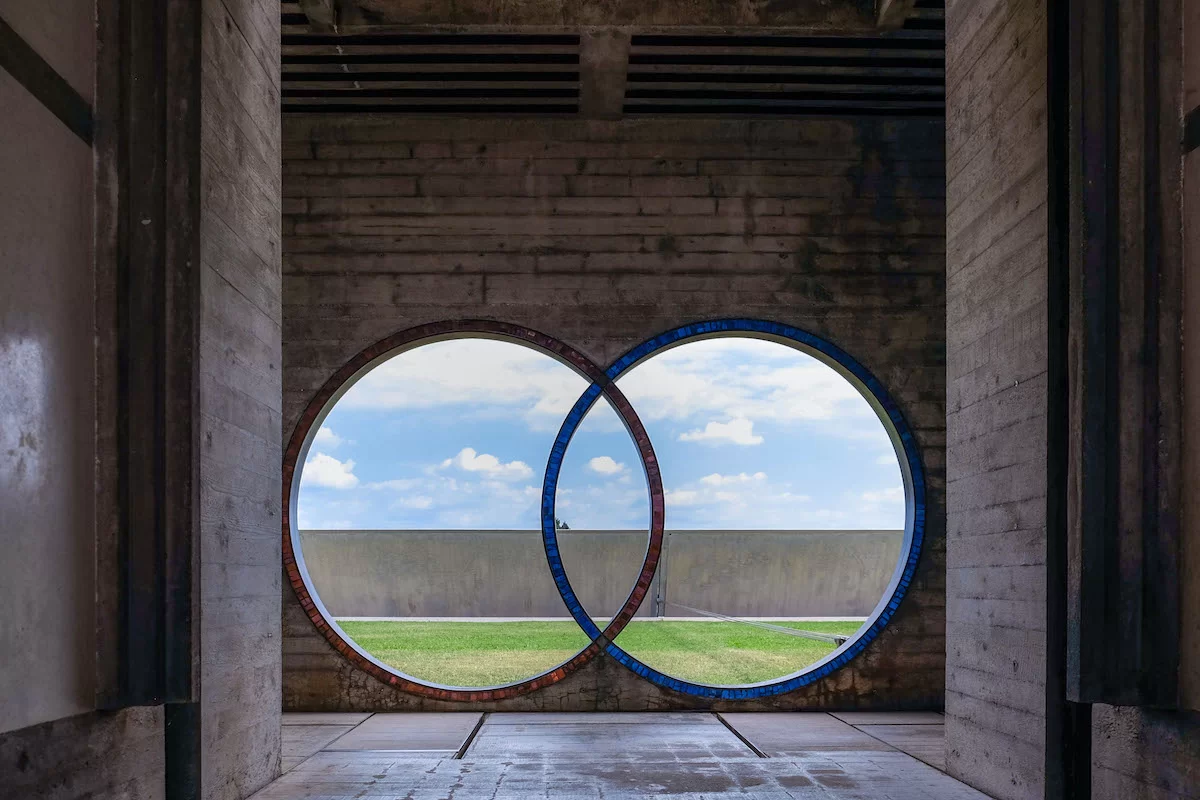
Among the most evocative locations is the Brion Memorial in San Vito d’Altivole, designed by architect Carlo Scarpa. Suspended between architecture and landscape, it was also chosen as a set for Dune: Part Two by Denis Villeneuve, thanks to its rigorous geometry and its ability to evoke a sense of timelessness.
Vicenza and its surroundings represent one of the most refined expressions of cinematic Veneto. The Palladian city, with its harmonious architecture, has been chosen by directors such as Joseph Losey, who skillfully highlighted the relationship between space and storytelling.
Around the city, castles and historic residences, like the Castle of Thiene, are regularly used for productions and shoots. Here, cinema finds settings that seem already designed to be told: perfect lines, carefully crafted perspectives, and a balance between nature and architecture that translates effortlessly onto the screen.
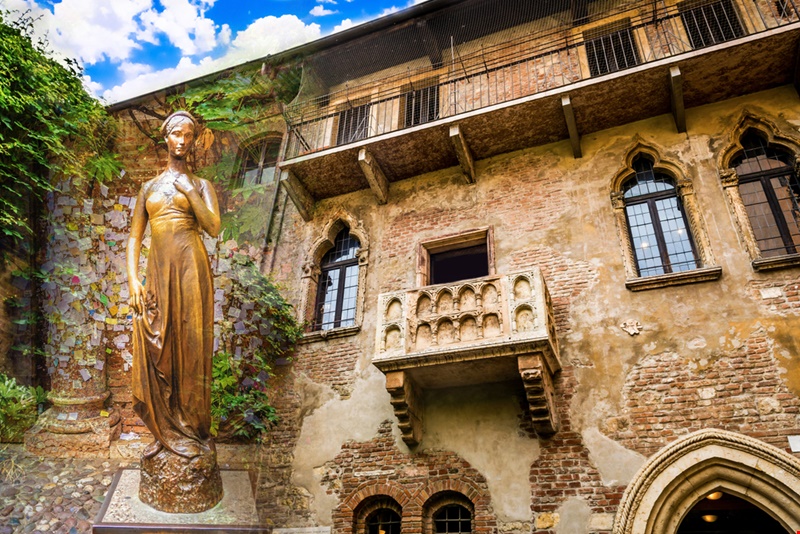
Verona, deeply tied to romantic storytelling, became the perfect backdrop for Letters to Juliet (2010). The film moves through the city, touching both its most iconic landmarks and lesser-known corners, creating an itinerary that feels both cinematic and real.
From Juliet’s House, with its famous balcony and the club that replies to lovers’ letters, to more intimate spots like Via Sottoriva and Piazzetta Pescheria, the city reveals itself through a more authentic lens.
Panoramic viewpoints such as Castel San Pietro and historic sites like Ponte Nuovo further shape an image of Verona that goes beyond clichés, turning it into a layered narrative space filled with history and suspended atmospheres.
Exploring Veneto through the lens of cinema means discovering a region that doesn’t simply serve as a backdrop, but actively enters the narrative, enriching it and transforming it.
Each place carries its own story, but also the potential to be reinterpreted. That is the power of cinema: seeing what already exists and giving it back through a new perspective.
Ultimately, visiting these places today means doing the same. Walking through alleyways, villas, squares, and landscapes with the awareness that they have already been lived, told, and imagined, and precisely for that reason, are still capable of surprising us.