In Venice, September has a very specific sound. It’s the click of cameras, the rhythm of footsteps on the red carpet, the buzz of voices echoing between the Palazzo del Cinema and the Lido waterfront.
The Venice Film Festival is not just a festival, it’s a moment when the city shifts its pace and becomes the center of the cinematic world. A place where glamour meets artistic exploration, and where a new story takes shape every year.
The 2026 edition is approaching with high expectations. And like any major event, it’s not just something to watch, it’s something to experience.
To truly understand what the Venice Film Festival represents, you have to start from the beginning.
The first edition dates back to 1932, an intuition that would forever change the way cinema is presented. Not just a showcase, but the first film festival in history.
Over the years, the Festival has moved through different eras, reflecting the cultural and political shifts of its time. From its early phase, marked in part by propagandistic influences, to the post-war period, when it rediscovered a more authentic international and artistic dimension.
The 1950s and 1960s were its golden age: the Lido filled with stars, European cinema entered an extraordinary season, and the Golden Lion became one of the most coveted awards in the world.
There were also moments of crisis, such as the post-1968 period, which led to the suspension of the competition. Yet it was precisely through these fractures that the Festival managed to reinvent itself, returning stronger and more open to new forms of cinema.
Today, the Venice Film Festival stands alongside Cannes and Berlin as one of the three major international showcases. With one key difference: Venice was the first, and in spirit, it still is.
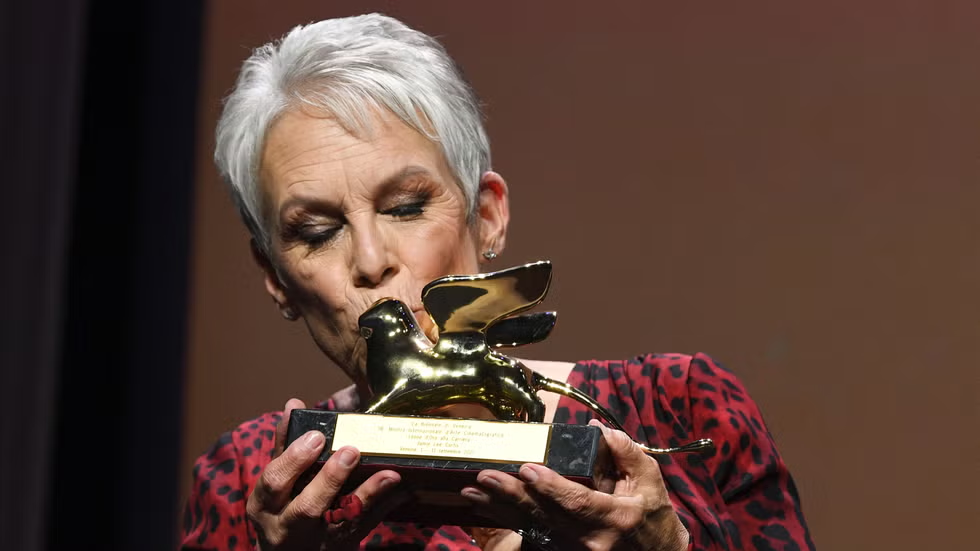
Jamie Lee Curtis, 2021
From September 2 to 12, 2026, the Lido will host the 83rd edition of the Festival. The program promises to be rich and multifaceted, capable of bringing together different cinematic voices.
The opening film will be Ink by Danny Boyle, based on a contemporary stage play and featuring an international cast. Closing the festival, out of competition, will be Dio ride by Giovanni Veronesi, confirming a strong Italian presence in key moments of the program.
The selection aims for a precise balance: on one side, the appeal of major productions and international stars; on the other, the rigor of auteur cinema, which has always been at the heart of the Festival.
Twenty films will compete for the Golden Lion, in a selection that spans different geographies and cinematic languages.
Among the most anticipated titles are works by internationally renowned directors such as Werner Herzog, Hirokazu Kore-eda, Lee Chang-dong, and Martin McDonagh, alongside emerging voices and new perspectives.
The Italian presence is particularly noteworthy, with five films in competition. Among them is the return of Nanni Moretti, more than forty years after his last appearance in competition, as well as works exploring personal and family memory, blending introspection with social storytelling.
A selection that once again confirms the Festival’s vocation: to bring different experiences into dialogue without losing coherence.
Beyond the main competition, Venice 83 broadens its scope.
The Out of Competition section will feature films by established auteurs and productions that fall outside competitive frameworks, while documentaries will explore contemporary themes and key cultural figures.
Among the most anticipated titles is a documentary on the Oasis reunion, alongside works experimenting with new narrative forms, including the use of artificial intelligence. A clear signal: cinema continues to evolve, and Venice remains one of the most privileged places to observe this transformation.
A new section, Film on Films, will also debut, dedicated to cinema reflecting on itself. Among its highlights is Luca Guadagnino’s ambitious project on Bernardo Bertolucci: Joie de vivre, a work lasting over seven hours that explores the life, vision, and cinema of the great Italian director, conceived as an immersive journey through archival materials, testimonies, and contemporary reinterpretations.
Meanwhile, Orizzonti continues to serve as a space for new trends, with a particular focus on emerging directors and less visible film industries.
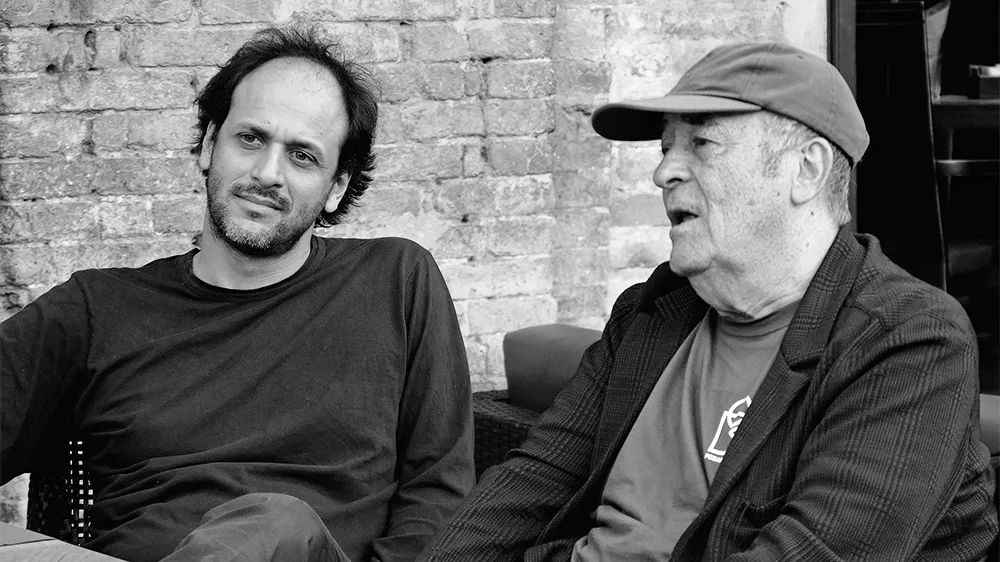
Luca Guadagnino & Bernardo Bertolucci
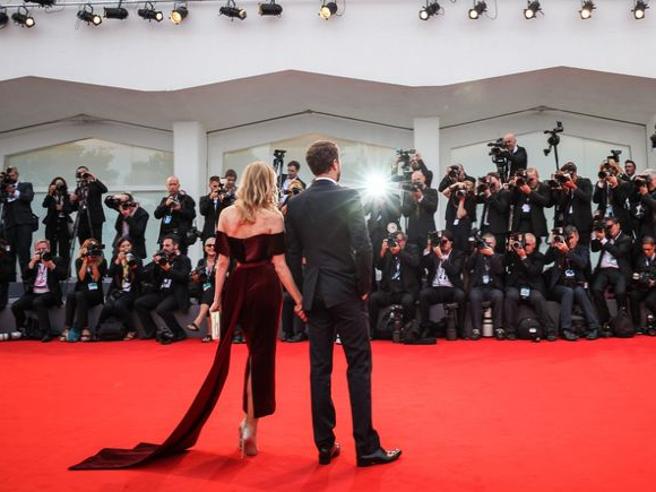
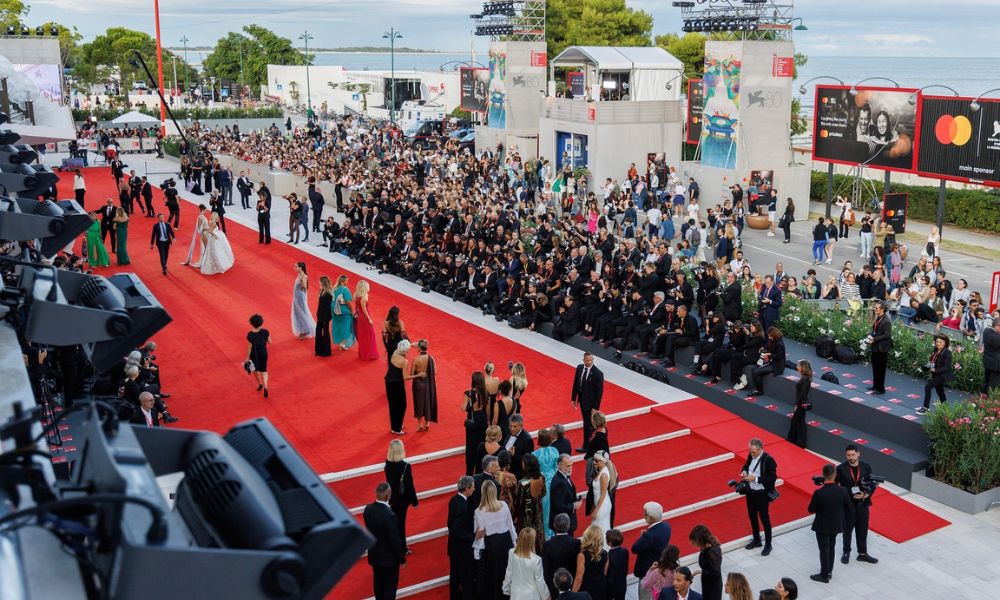
If cinema is the heart of the Festival, the red carpet is its most immediate expression.
The 2026 edition will welcome some of the most recognizable international names. George Clooney and Ellen Burstyn will receive Lifetime Achievement Golden Lions, while actors and directors such as Penélope Cruz, Javier Bardem, Robert Pattinson, and Alicia Vikander will bring their latest projects to the Lido.
Alongside them, figures from music and contemporary culture will also be present, highlighting how the Festival has increasingly become a crossroads of different creative languages.
The Venice Film Festival is not reserved for industry insiders, it’s an open event that can be experienced in many ways.
The Lido is the heart of it all, easily reachable from Venice by vaporetto. This is where the main screenings, events, and the iconic red carpet take place.
For those who want to take part, tickets are available for selected screenings. You can also watch the arrival of the stars or simply immerse yourself in the atmosphere.
The best advice is to plan ahead, choosing moments that align with your interests. Even without a fixed schedule, the Festival reveals itself through details: an unexpected screening, a walk along the waterfront, the energy that fills the city.
Beyond events and celebrity appearances, the Venice Film Festival remains, above all, a space for reflection.
The selected films engage with contemporary themes, transforming reality into narrative: wars, social change, relationships, identity. Cinema becomes a tool to interpret the present.
As artistic director Alberto Barbera has pointed out, cinema does not simply depict the world, it helps us understand it. It is a form of knowledge, capable of going beyond the surface.
And perhaps this is why we keep returning. Because every film, even the most imperfect, takes us a step further.
As Esther Kinsky writes in Of Light and Dust, “cinema is a place of expectations that are rarely disappointed, because it always allows us to see further than before.”
Ultimately, this is what makes the Venice Film Festival so special: not just what it shows, but what it allows us to imagine.