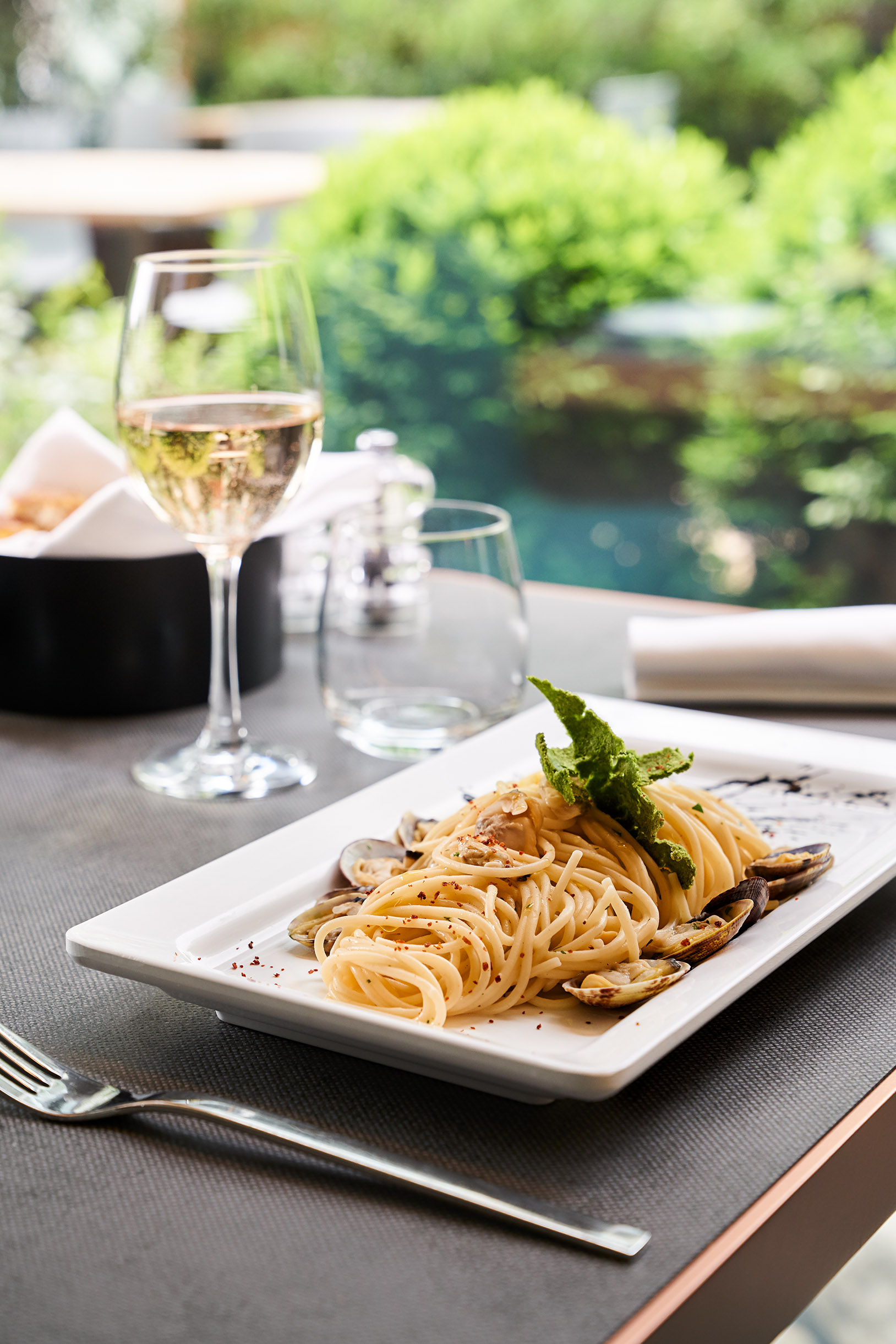
There’s a moment in the day when everything slows down. The calli fill with voices, tables come alive, glasses gently clink. It’s aperitivo time, a ritual that in Veneto is not just a habit, but a true cultural expression.
Here, more than elsewhere, aperitivo retains its original meaning: a moment of transition, of encounter, of lightness. It’s not only about what you drink or eat, but how you spend time together. A daily gesture that tells the story of the land, its traditions, and its way of experiencing time.
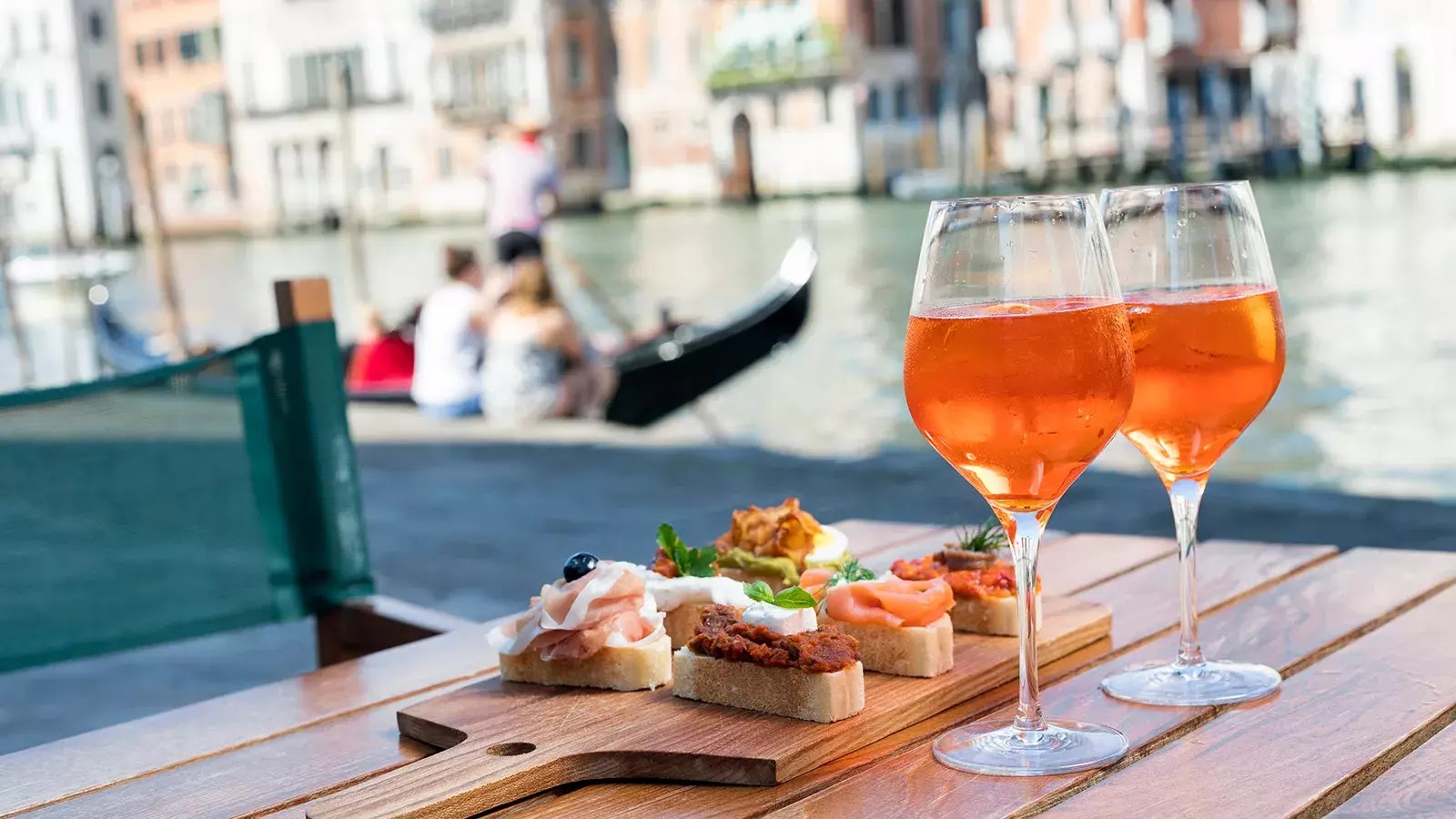
The idea of having a drink before dinner, accompanied by small bites, has very deep roots. As far back as Ancient Rome, there was the habit of opening a meal with drinks and light snacks, but over time this moment evolved into a true social phenomenon.
In Italy, and particularly in Veneto, aperitivo has become a space of conviviality, an informal yet deeply rooted appointment. It has never been just about consumption, but about sharing: a way to end the day, meet up, and connect.
In Venice, this tradition dates back to the 15th-century osterie, “bacari”, where merchants would gather for a quick bite and to close business deals.
Over time, each area developed its own identity, shaped by local flavors and distinctive rituals. In Veneto, this identity expresses itself through a perfect balance between simplicity and quality, between everyday gestures and tradition.
Today, the spritz is one of the most recognizable symbols of the Italian aperitivo worldwide. Its bright orange or red color has become iconic, but its origins are far more essential.

The first spritz was simply a glass of still white wine “lengthened” with sparkling water. This habit dates back to the Austro-Hungarian period, when soldiers, unaccustomed to local wines, would lighten them with a splash of water. Hence the name, from the German spritzen, meaning “to spray.”
In its original form, still found today in Venetian bacari, the spritz is white: still wine and seltzer, with no bitters or bright colors. Only later, in the 20th century, did variations with Select (a Venetian bitter created in 1920) and Aperol emerge, shaping the drink’s contemporary look.
And yet, despite its evolution, the most authentic version still endures. You just have to ask for it: a white spritz, simple, and deeply rooted in the territory.
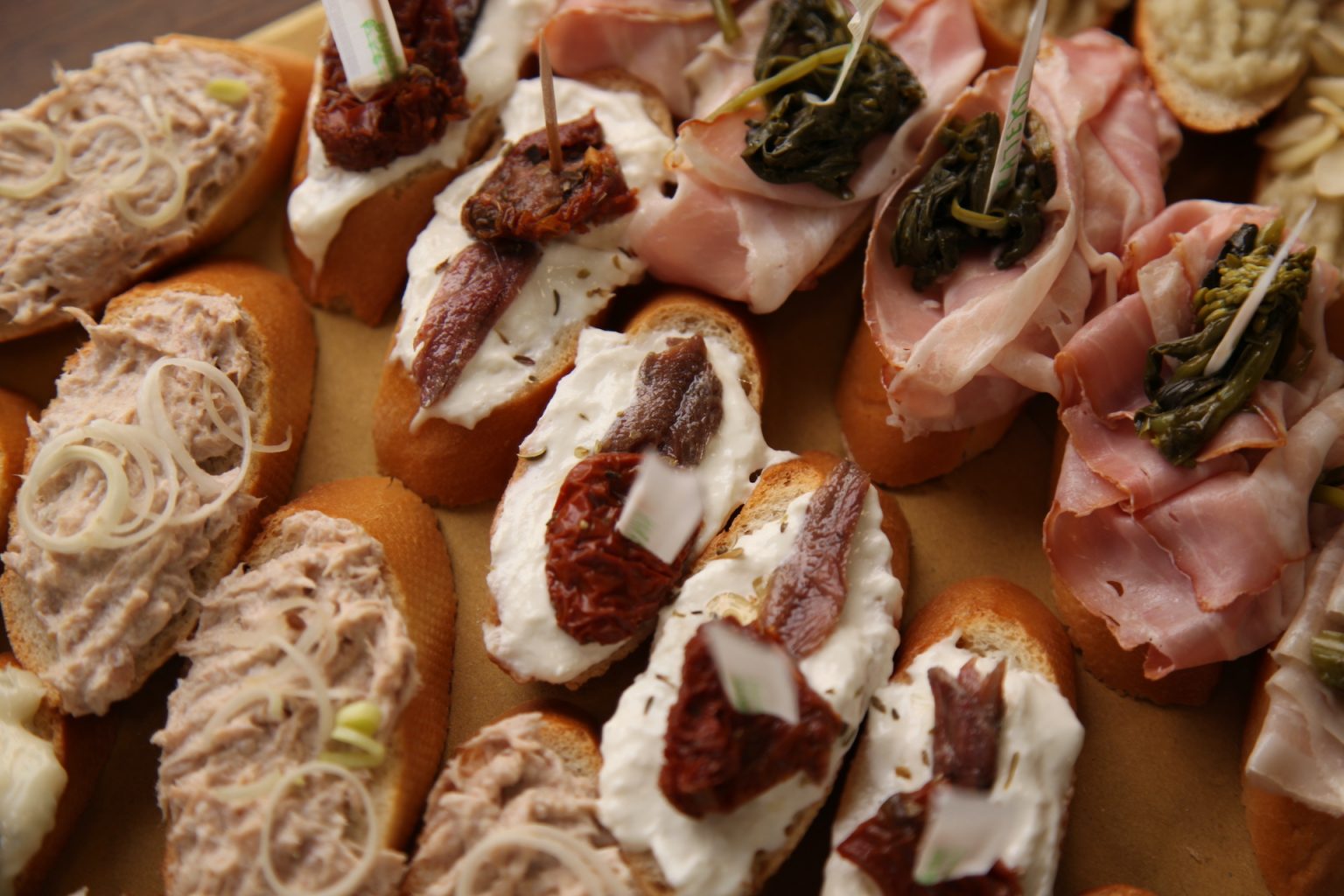
In Veneto, and especially in Venice, aperitivo cannot exist without cicchetti. These small bites encapsulate the entire local gastronomic tradition, born out of practicality and eventually becoming an institution.
The word comes from the Latin ciccus, meaning “small quantity,” perfectly describing their nature: quick bites, rich in flavor. Their origins date back to the 15th century, when Venetian merchants would accompany wine with something to eat, to avoid drinking on an empty stomach during negotiations.
Today, cicchetti are the true street food of the lagoon. They are found in bacari, the traditional Venetian taverns, and range from simple preparations to more creative reinterpretations of local cuisine. Among the most iconic are baccalà mantecato and sarde in saor, alongside cured meats, cheeses, and vegetables.
Alongside cicchetti, another key player is the Venetian tramezzino: soft, generously filled, often slightly domed, a local reinterpretation of the sandwich that has become an essential part of the aperitivo experience.
To truly experience Venetian aperitivo, choosing the right places is essential, not just for what you drink, but for the atmosphere, history, and the way these spaces tell the story of the city.
Harry’s Bar
Just steps from St. Mark’s Square, it is one of the city’s most iconic venues. Founded in the 1930s, it’s where Giuseppe Cipriani created the famous Bellini, a cocktail made with white peach and sparkling wine. Sitting here means stepping into a story shaped by cinema, literature, and great personalities, from Hemingway to Orson Welles.
Caffè Florian
The oldest café in Italy, opened in 1720 under the arcades of St. Mark’s Square, is a symbol of Venetian tradition. Here, aperitivo becomes an elegant experience, where classics meet contemporary reinterpretations, accompanied by tramezzini and freshly prepared dishes.
Bacareto da Lele
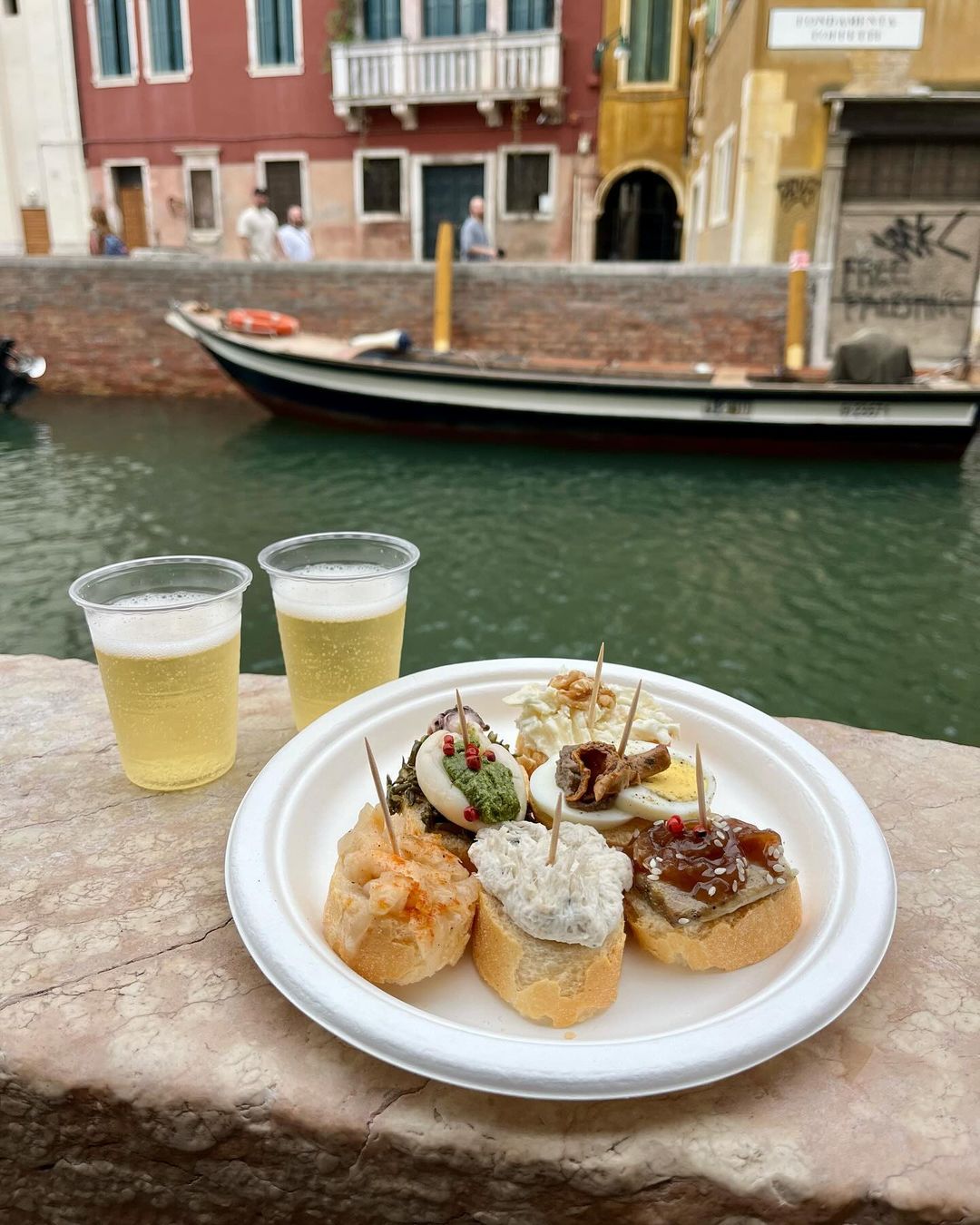
Small, essential, always crowded. This tiny bacaro near Tolentini is a must for anyone seeking authenticity. You eat and drink standing by the canal, enjoying simple sandwiches and glasses of wine in a spontaneous, lively atmosphere.
Cantine del Vino già Schiavi
Located in the Dorsoduro district, it is one of the most popular bacari among young Venetians, known simply as “il bottegon.” The atmosphere is authentic and old-school, with a selection of fresh and creative cicchetti, prepared daily and always affordable. Perfect for a no-frills aperitivo by the canal.
Cantina Do Mori
Considered one of the oldest bacari in Venice, it still retains its original charm. The wooden counter, intimate spaces, and selection of cicchetti, from cured meats to baccalà mantecato, tell a story of tradition preserved over time.
Ostaria dai Zemei
Just steps from Rialto, recognizable by its outdoor tables and sign dedicated to the twins. Its wide and varied cicchetti selection changes daily, featuring meats, cheeses, fish, and vegetables. A perfect place to stop and let curiosity guide your choices.
Today more than ever, aperitivo has become something universal, a nearly sacred moment marking the transition from work to leisure, from the rush of the day to the pleasure of slowing down.
Wherever you are, aperitivo is that pause we allow ourselves: to reconnect, to be together, to breathe. It’s made of simple gestures, a shared glass, a laugh, a conversation that lingers, yet it carries a deeper meaning rooted in conviviality, encounter, and lightness.
In Veneto, this moment takes on an even more authentic meaning. Here, aperitivo is not just a modern habit, but a tradition deeply rooted in history, in merchants, bacari, and calli. It’s a ritual that has evolved without ever losing its essence.
For those staying at Move Hotels Venezia Nord, all of this is within easy reach. Venice is just a short distance away, perfect even for a quick escape: enough time to wander through the city, stop at a bacaro, order a spritz, and experience aperitivo in its most authentic setting. Sometimes, it really doesn’t take much to change pace.