Spring is a season that does more than simply change the landscape: it rewrites it. In Veneto, this transformation takes shape in a widespread network of gardens, historic parks, and botanical spaces that tell centuries of interaction between humans and nature.
These are not just places to admire blooms, but true cultural landscapes where architecture, symbolism, and botany coexist. Walking through them means stepping into layered stories shaped by science, art, spirituality, and vision.
From Renaissance gardens to 19th-century romantic parks, the area between Venice, Padua, and the Euganean Hills offers a remarkable spring itinerary, capable of alternating contemplation and discovery.
(about 40 minutes from Mogliano Veneto)
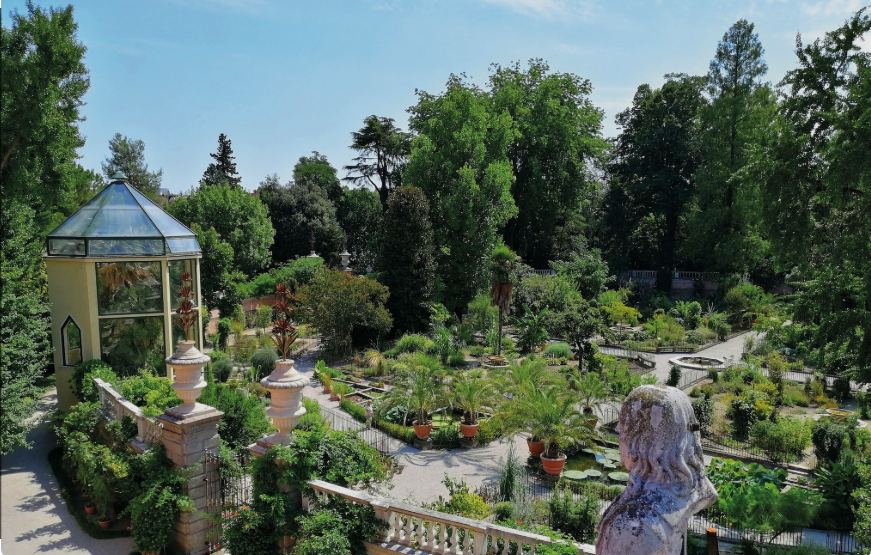
Founded in 1545, the Botanical Garden of Padua is the oldest university botanical garden in the world still located in its original site. It is not merely a garden, but a place that has played a crucial role in the development of botany and modern science.
Originally created to allow medical students to identify medicinal plants, it still preserves its Renaissance core, the so-called “Garden of Simples,” organized according to a perfectly geometric layout. Around this original structure lies a larger complex spanning approximately 3.5 hectares and hosting over 3,500 plant species from around the world.
Over the centuries, this space has become a key reference point for scientific research, contributing to the development of disciplines such as medicine, chemistry, and ecology. For this reason, it was included in the UNESCO World Heritage list in 1997, recognized as a foundational site in understanding the relationship between nature and culture.
Today, the visit alternates between historic settings and contemporary greenhouses, in a journey that combines scientific rigor with visual wonder.
https://ortobotanico1545.it/scopri/i-luoghi/orto-rinascimentale/
(about 45 minutes from Mogliano Veneto)
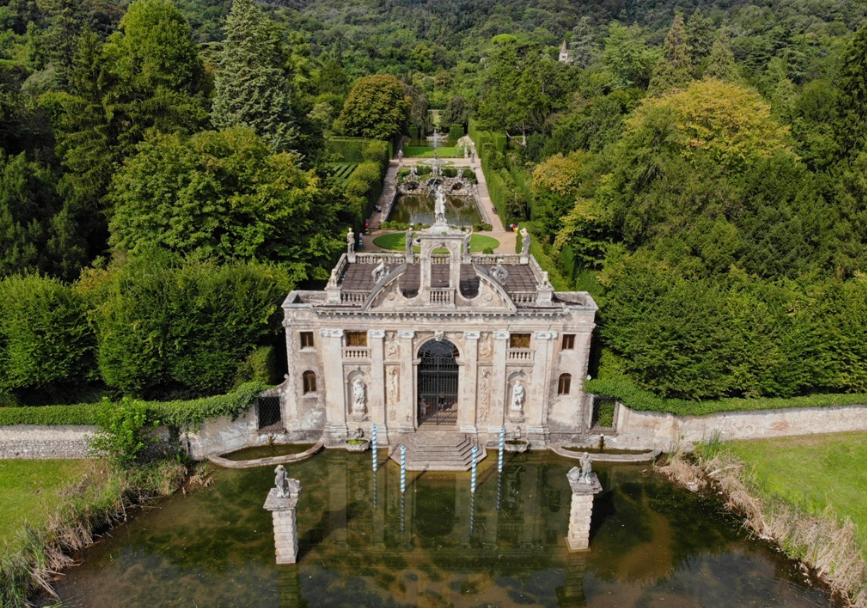
The Garden of Villa Barbarigo in Valsanzibio is one of the most extraordinary examples of a symbolic Baroque garden in Europe. Created between 1665 and 1696, it was conceived as more than an aesthetic project: it is an allegorical path representing the human journey toward knowledge and redemption.
It was commissioned by the Barbarigo family following a solemn vow made during the plague of 1631. The project was entrusted to Luigi Bernini, papal architect and hydraulic engineer, who developed a complex system of architectural and natural elements perfectly integrated.
The garden extends over more than 10 hectares and includes over 60 statues carved in Istrian stone, fountains, waterfalls, streams, ponds, and water features still functioning today. Among the most evocative stops are the Boxwood Maze, the Hermit’s Grotto, Rabbit Island, and the Monument to Time.
It is not just a place to visit, but an experience to be lived, where every element carries precise meaning. Its integrity and complexity make it one of the best-preserved historic gardens in Europe.
https://www.grandigiardini.it/36-visita-Giardino-Monumentale-di-Valsanzibio-biglietti-eventi#part4
(about 35 minutes from Mogliano Veneto)
In the heart of Padua, Parco Treves represents what remains of an ambitious 19th-century project designed by Giuseppe Jappelli, one of the most important landscape architects of his time.
Originally conceived as a private botanical garden, it stood out for the extraordinary variety and rarity of its cultivated species, earning recognition as one of the few examples of its kind in Italy. It was not just an ornamental garden, but a complex system in which architectural elements also served technical functions for the preservation of exotic plants.
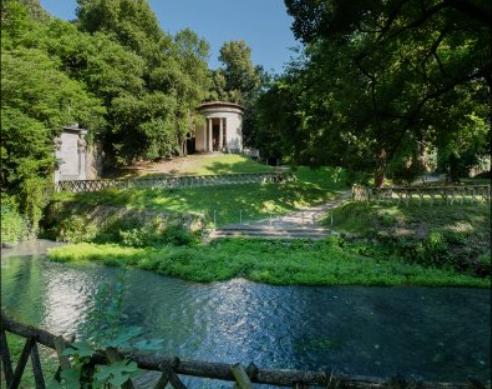
Today, despite urban transformations affecting the area, the park retains some original features, such as the neoclassical temple, the gardener’s house, and the caryatid pavilion. These remnants help preserve the atmosphere of a place that was originally intended as a small Eden in the heart of the city.
https://www.turismopadova.it/giardini-storici-e-parchi/
(about 50 minutes from Mogliano Veneto)
Parco Frassanelle extends over approximately 70 hectares within the Euganean Hills and is one of the most fascinating examples of a 19th-century romantic garden in Veneto. It was designed by Alberto Papafava, a painter and landscape enthusiast who conceived the park as a living work of art.
Inspired by English gardens, it features wide perspectives, alternating open spaces and shaded areas, and a careful use of the land’s natural morphology. Hills, meadows, woods, and bodies of water combine into a harmonious and varied whole.
Among its most distinctive features are the 19th-century artificial caves, the small lake, the bamboo grove, and the neoclassical temple. The paths that cross the park allow visitors to explore very different environments, offering an immersive experience in a landscape that remains largely untouched.
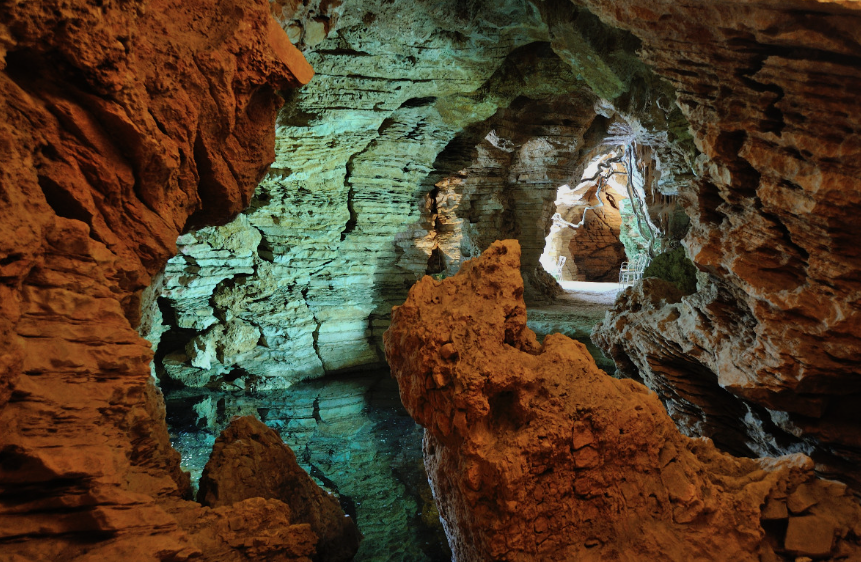
https://it.frassanelle.com/parco-frassanelle-gioiello-venetoparco-frassanelle-gioiello-venetogrotte
(about 1 hour from Mogliano Veneto)
Located on the slopes of Monte Summano, Parco Rossi is part of a complex system including a villa, park, and estate. Built in the 19th century, it reflects an era when advances in transportation and trade facilitated the introduction of plant species from around the world.
The park extends over more than 4 hectares and is divided into two main areas: the “Rive,” originally intended for agricultural use but enriched with landscape features, and the “Laghetto,” which represents the most scenic heart of the complex.
Here, all the typical elements of a romantic garden can be found: winding paths, water features, rustic architecture, and archaeological imitations, creating a dynamic and picturesque landscape. The presence of exotic species and the diversity of environments make the park particularly interesting from a botanical perspective.
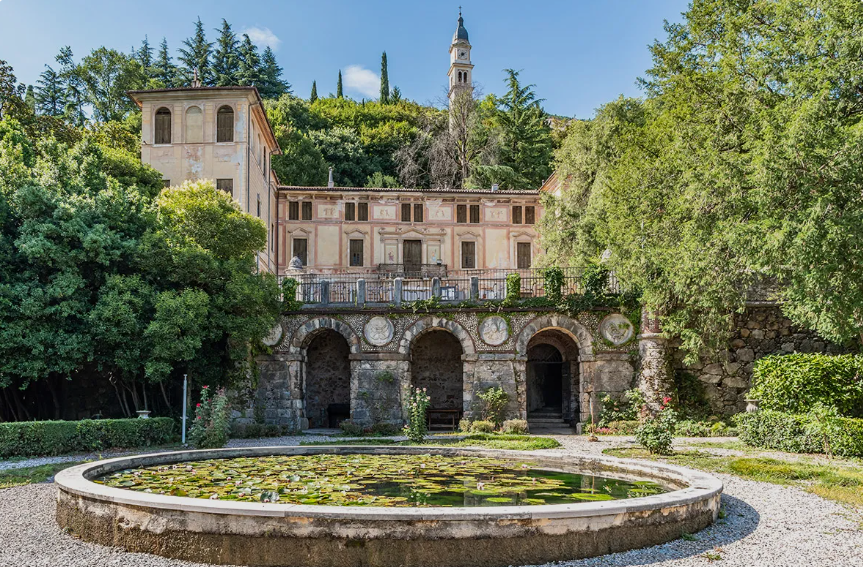
https://shop.parcorossi.it/
(about 50 minutes from Mogliano Veneto)
Even Venice, a city of water and stone, preserves green spaces of great value, where the tradition of the garden takes on surprising forms.
Created during the Napoleonic era, the Royal Gardens overlook the St. Mark’s area and have recently been reopened to the public following a major botanical restoration. The project preserved the 19th-century Italian garden layout, characterized by geometric flowerbeds and orderly paths, while enriching it with a wide variety of plant species.
Among its most distinctive features is the long pergola covered with wisteria and climbing plants, while the flowerbeds host thousands of specimens including agapanthus, hydrangeas, irises, and other ornamental species. The restoration has restored the garden’s central role in city life, making it a space of balance between design and nature.
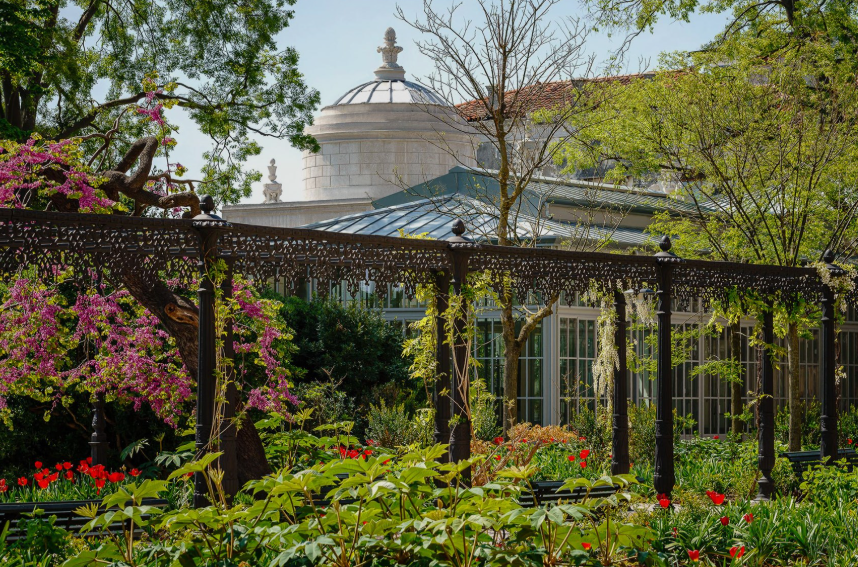
https://www.archiportale.com/news/2020/11/aziende/coperture-zintek-per-gli-edifici-dei-giardini-reali-di-venezia_79741_5.html
On the Island of San Giorgio Maggiore, the Borges Labyrinth represents one of the most original interpretations of the contemporary garden. Created in 2011 by the Giorgio Cini Foundation, it is a tribute to Argentine writer Jorge Luis Borges.
The labyrinth’s design reproduces the author’s name using over 3,000 boxwood plants, forming a path approximately one kilometer long. It is not meant to disorient, but to guide visitors through a slow, reflective experience.
Along the way, symbolic elements linked to Borges’ universe appear, such as mirrors, hourglasses, and evocative figures. The result is a space that blends landscape, literature, and introspection, in a continuous dialogue between form and meaning.
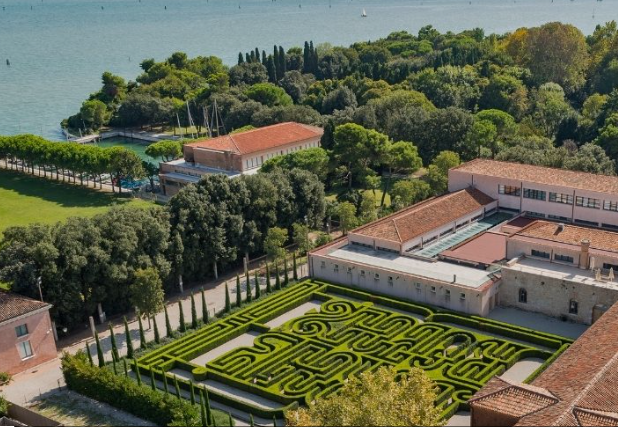
https://www.visitvenezia.eu/venezianita/scopri-venezia/a-venezia-apre-per-la-prima-volta-al-pubblico-il-labirinto-piu-bello-ditalia
Historic gardens are not simply places to visit, but living testimonies of an ancient relationship between humans and nature. They tell stories of different eras, cultural visions, and ways of inhabiting the landscape that continue to influence the present.
Today more than ever, these spaces take on a value that goes beyond aesthetics. They are places of quiet, observation, and balance. They offer the opportunity to slow down, reconnect with natural time, and rediscover a more essential dimension of experience.
In spring, when everything comes back into bloom, they become even more intense. Not just to be seen, but to be walked through—step by step—allowing the landscape itself to set the pace.