When we think of Venice, the city’s geography almost seems to disappear behind the power of its most iconic images. St. Mark’s Square, Rialto, the Grand Canal, the calli. And then Murano and Burano, usually the first destinations that come to mind when venturing beyond the historic center.
But Venice is only one part of a much larger system.
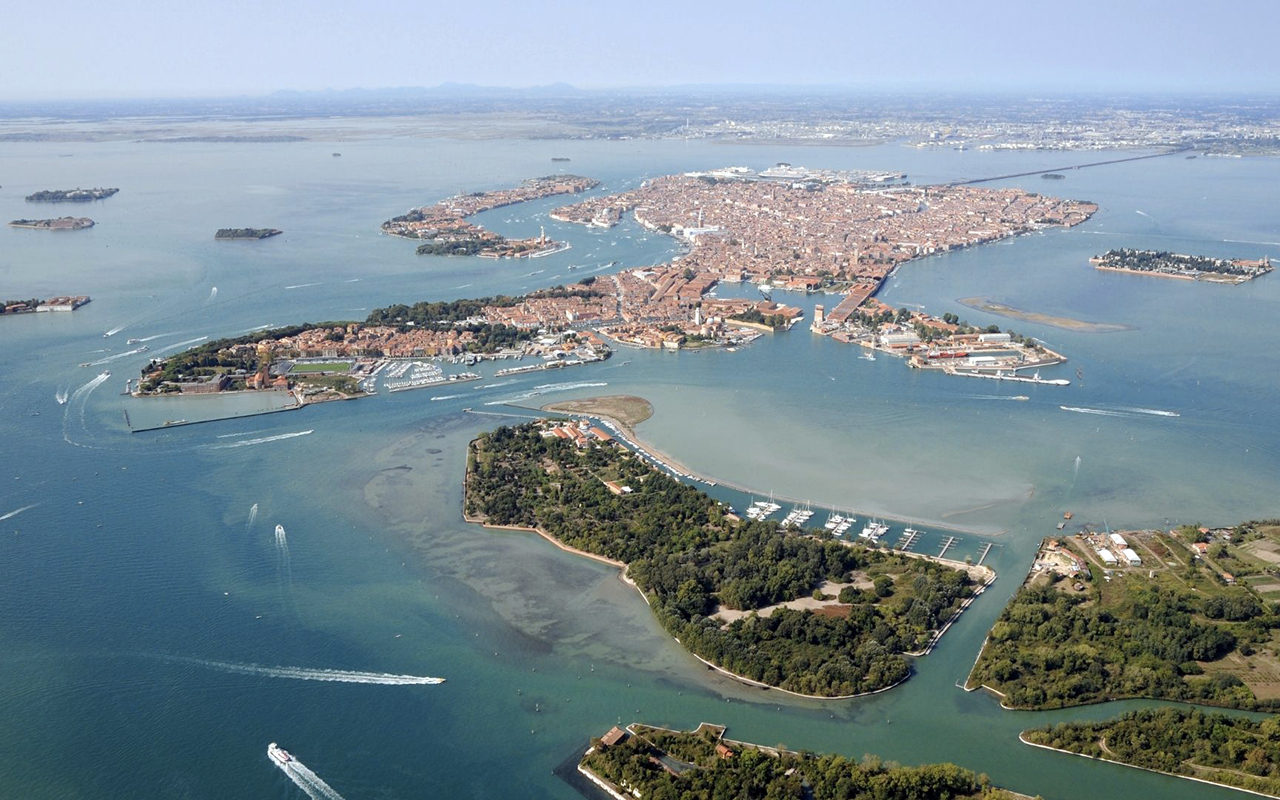
The Lagoon is a landscape in constant balance between water and land, shaped over centuries by the meeting of rivers, tides, and the Adriatic Sea. Within it, canals, salt marshes, mudflats, and stretches of dry land form a fragmented geography dotted with dozens of natural and artificial islands. Some are inhabited, others are home to monasteries, vegetable gardens, or cultural institutions; others still preserve military buildings, former places of care, or traces of settlements that have long since disappeared.
Exploring them means discovering that there is not just one Venice, but an extraordinary cultural mosaic. Worlds separated by just a few minutes on the water, yet surprisingly different from one another, where the history of the Serenissima intertwines with agriculture, religion, art, science, and nature.
For a day away from the most popular itineraries, we have selected some of the Lagoon’s lesser-known islands that are well worth discovering.
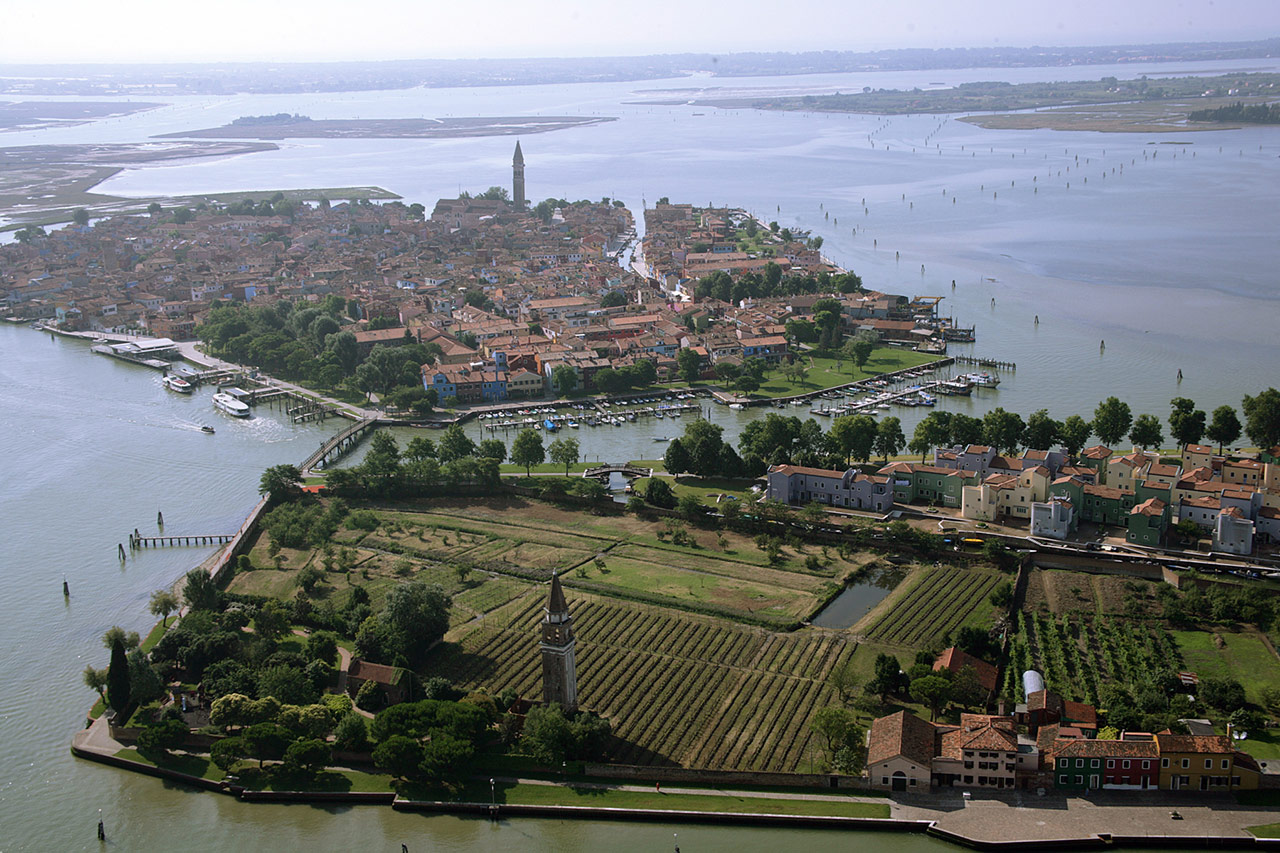
All it takes is crossing the distinctive Ponte Longo, the wooden bridge connecting Mazzorbo to Burano, for the colors and bustle to gradually give way to a much quieter landscape.
Mazzorbo has an ancient story to tell. The area was already involved in trade in pre-Roman times, while permanent settlement is traditionally traced back to the 7th century, when people from the mainland, particularly from the Altino area, sought refuge on the islands of the Lagoon during the barbarian invasions. Around the 10th century, the island reached one of its most prosperous periods, before the rise of Venice gradually diminished its importance. Mazzorbo then became primarily an agricultural area and a place of retreat for the Venetian aristocracy.
Of a past in which the island was once home to numerous religious buildings, the Church of Santa Caterina remains its most significant legacy. Its history is linked to an ancient Benedictine monastery, and inside it preserves an exceptional curiosity: a bell dating back to 1318, considered the oldest in the Lagoon.
But it is above all Mazzorbo’s relationship with the land that continues to define the island today. Its vegetable gardens produce the castraura, the first bud of the artichoke, whose distinctive characteristics come from the brackish soil. And within the ancient walled vineyard of the Venissa Estate, the Dorona still grows, a native Venetian grape variety that tells the story of an agricultural tradition that seems almost improbable in a landscape dominated by water.
Even contemporary architecture has quietly become part of this story: in the 1980s, Giancarlo De Carlo designed a residential complex here to help repopulate the island, reinterpreting the forms and proportions of traditional lagoon living through a modern lens.
If Mazzorbo has preserved its agricultural vocation, Sant’Erasmo has made it the very heart of its identity.
The second-largest island in the Lagoon, it has been known for centuries as the “Vegetable Garden of Venice.” As early as the Middle Ages, it played an important role as a port of call connected to Torcello and Murano, while plots of land were entrusted to Venetian patrician families and monasteries. As Venice gradually became more central, the island lost some of its former functions, but not its most important one: supplying the city with food.
Even today, Sant’Erasmo is a landscape of fields, rows of crops, and country roads that seem to belong more to the Veneto countryside than to the traditional image of the Lagoon. Among its signature products is the famous Sant’Erasmo violet artichoke, alongside honey produced from the Lagoon’s salt marshes.
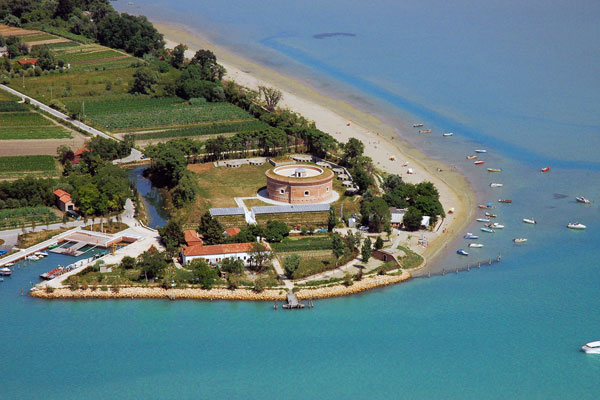
The island’s history, however, is not only agricultural. After the fall of the Serenissima, the French and Austrians strengthened the Lagoon’s defensive system, and between 1843 and 1844 the Torre Massimiliana was built: a circular fortification designed to control the Lido inlet, later used as an anti-aircraft battery during the Second World War and occupied by German troops in 1943.
Also worth visiting is the Church of Cristo Re, consecrated in 1929, which houses a Martyrdom of Saint Erasmus attributed to the school of Tintoretto.
And then there is the Bacàn, one of the island’s most distinctly Venetian curiosities: a sandbank that emerges at low tide, temporarily turning into a kind of lagoon beach for around six hours a day. Because it lies in front of the inlet, the currents are strong and the water is unusually clean for this part of the Lagoon, making it particularly popular with locals. It is also an unusual place from which to watch the sunset, far from the bustle of the historic center.
From Sant’Erasmo, a short journey towards Burano is enough for the landscape to change once again.
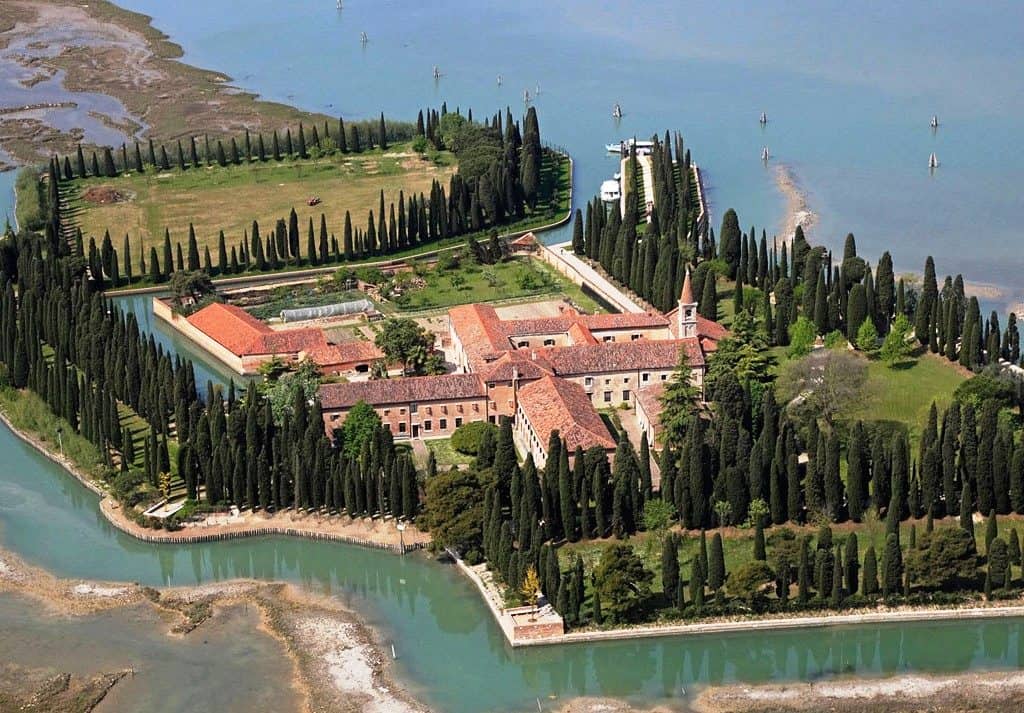
San Francesco del Deserto can already be recognized from the water by its cypress trees. There are no neighborhoods, shops, or streets to explore here: the island revolves around its Franciscan monastery and a history suspended somewhere between documented fact and legend.
Originally known as the Island of the Two Vineyards, tradition holds that it welcomed Francis of Assisi in the spring of 1220, on his return journey from the East. After meeting Sultan al-Malik al-Kamil in Damietta, Francis is said to have returned via Venetian trade routes and, while passing through Torcello, searched for a secluded place in which to pray. According to Franciscan tradition, this is where he found refuge.
In 1233, the island’s owner, Venetian nobleman Jacopo Michiel, donated it to the Friars Minor. The Franciscan community has remained here over the centuries, apart from a period in the 15th century when particularly unhealthy environmental conditions led to the island’s temporary abandonment. It is from this period that the name “del Deserto” is thought to originate: left uninhabited, the island appeared quite literally deserted.
The monastery still develops around its small church and also preserves what tradition identifies as the cell of Saint Francis. Visits are accompanied by the friars and therefore follow different schedules and arrangements from more conventional excursions around the Lagoon. And perhaps that is precisely what makes the island so special: this is not a destination to “see quickly,” but a place whose rhythm you have to adapt to.
Then there are islands that tell stories that reached Venice from much farther away.
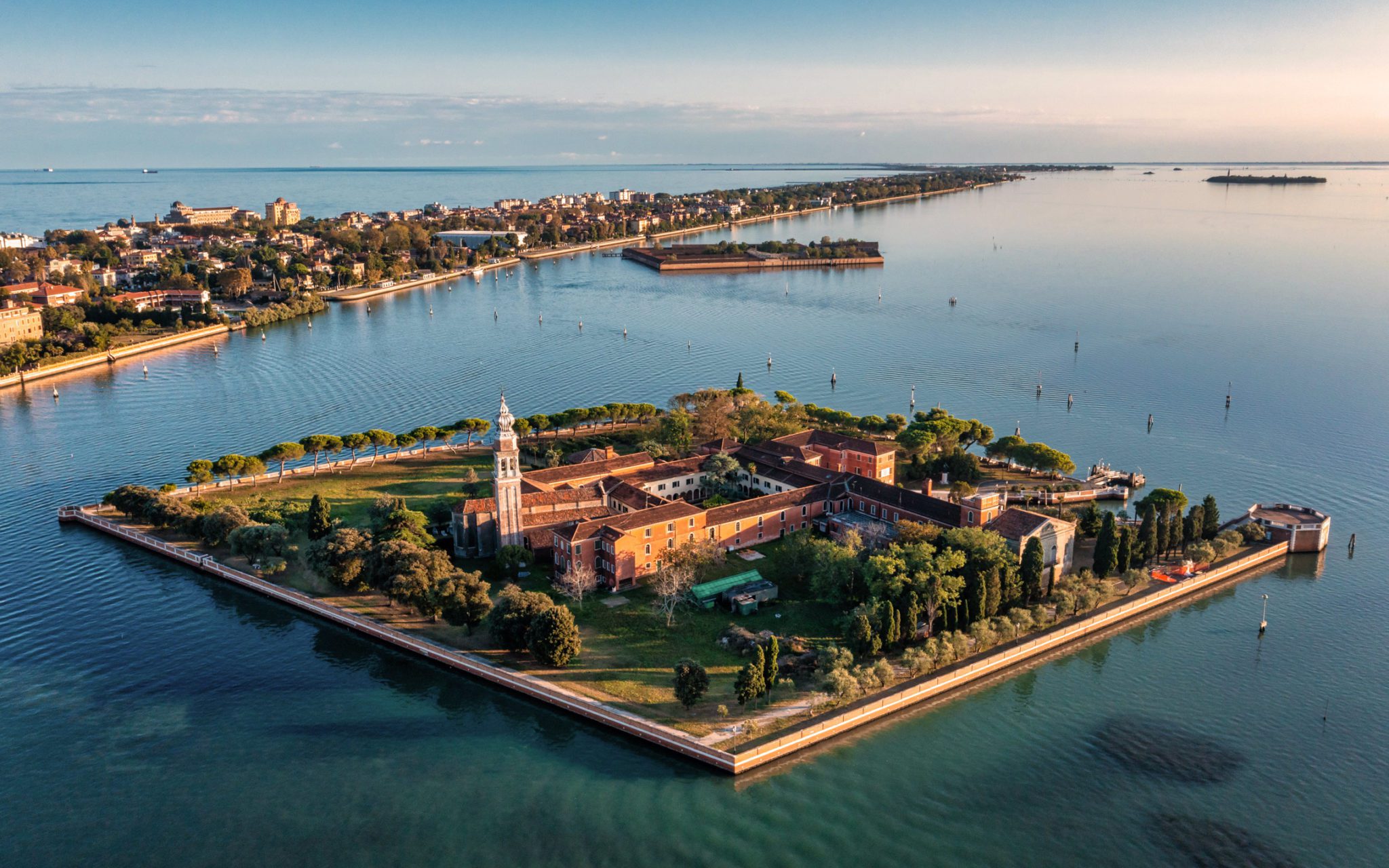
San Lazzaro degli Armeni is one of the most fascinating examples. After being used as a leper colony and then undergoing a long period of abandonment, in 1717 the island was granted by the Republic of Venice to Mekhitar of Sebaste, an Armenian monk fleeing persecution, who founded a community that would become one of the most important centers of Armenian culture outside Armenia.
Over the centuries, an extraordinary cultural heritage has developed behind the monastery walls. The library houses manuscripts and precious illuminated codices, while its collections include artifacts from different cultures, including the famous mummy of the Egyptian prince Nehmeket. The island’s printing tradition was equally remarkable: the Mekhitarist printing press became capable of publishing in dozens of different languages.
Lord Byron also has a connection with San Lazzaro. During his time in Venice, the poet regularly visited the island to study Armenian language and culture with the monks. A room still preserves his memory through portraits and objects, while the garden reveals an almost domestic side of monastic life, among olive trees and rose bushes. Roses are also at the heart of one of the Mekhitarists’ most unusual traditions: making rose petal jam.
Visiting San Lazzaro therefore means travelling, in the space of just a few hours, through Venice, Armenia, European literature, and Mediterranean history. A tiny island capable of holding a cultural heritage far greater than its size would suggest.
On Pellestrina, by contrast, geography takes center stage.
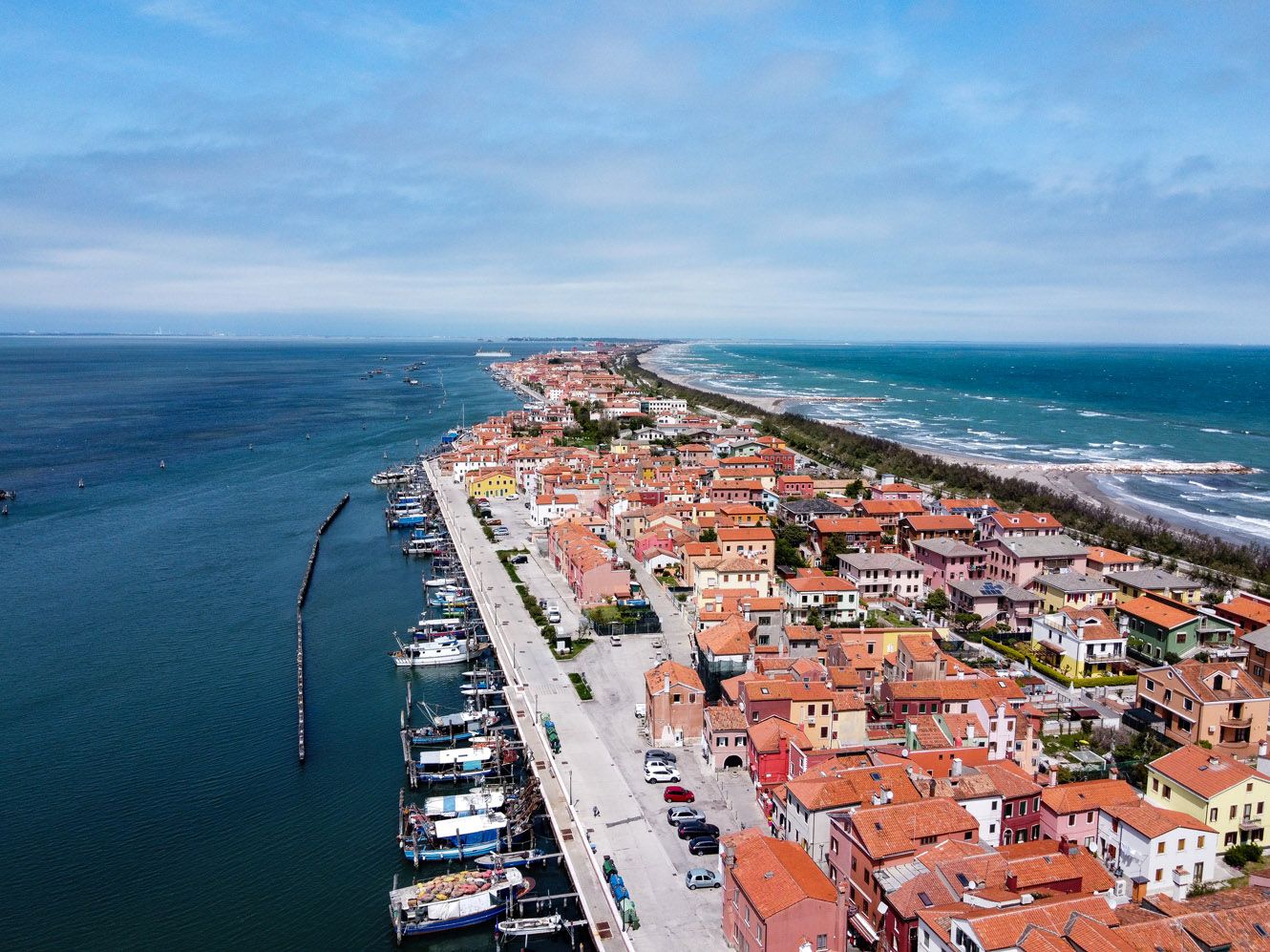
The island is an exceptionally narrow strip of land stretching for around eleven kilometers between the Lagoon and the open sea. In some places, it is only a few dozen meters wide, narrow enough to experience almost simultaneously the two very different waterscapes that surround it.
Permanently inhabited since the migrations caused by the barbarian invasions, Pellestrina has maintained an exceptionally strong relationship with fishing and the sea. Even the origin of its name remains uncertain: alongside historical interpretations linking it to the ancient fossae Philistinae, there is also the popular explanation of the fishermen’s “strange skin”, “pelle strana” in Italian, weathered by long days spent out on their boats.
One of the landscape’s most spectacular features is the Murazzi, the vast Istrian stone sea defenses built by the Serenissima and completed in the 18th century to protect the coastline from Adriatic erosion. At the southern end, meanwhile, the protected Ca’ Roman Nature Reserve preserves one of the best-conserved dune environments in the Upper Adriatic, together with remarkable biodiversity.
Pellestrina is perhaps one of the islands that most naturally invites you to slow down: exploring on foot or by bicycle, following that narrow line between two bodies of water and two different landscapes.
www.veneziaunica.it
Just a few minutes by boat separate St. Mark’s Square from a completely different story.
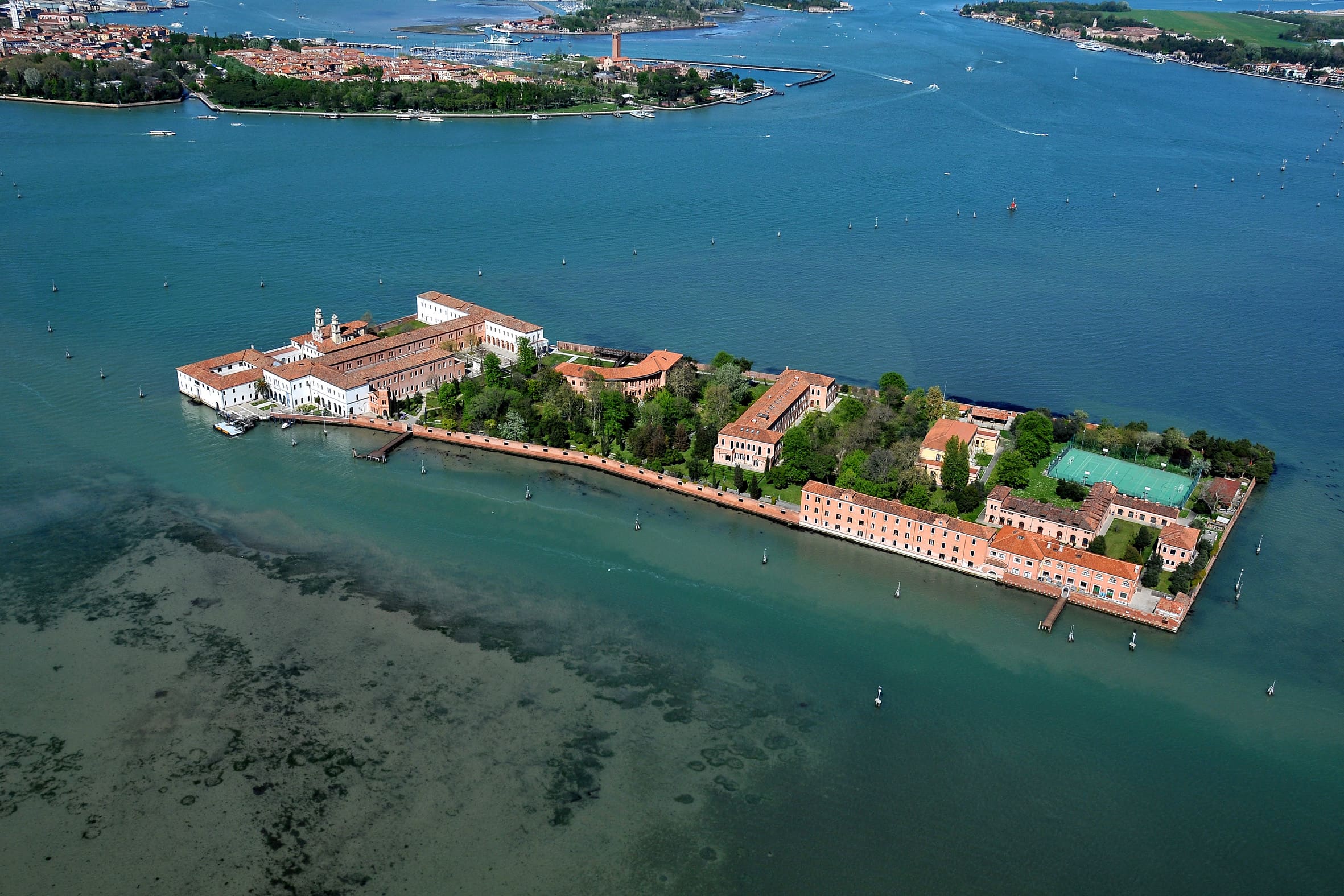
Located between the San Nicolò and Lazzaretto canals, San Servolo occupied a strategic position along the historic waterways leading towards Rialto. Over the centuries, its purpose changed several times: it was home to Benedictine monastic communities and later became primarily a place of care.
The longest and most complex chapter of its history is linked to psychiatric care. For many years, San Servolo housed a psychiatric hospital initially intended in part for military patients and later expanded to civilians. It remained active until the reforms introduced in Italy at the end of the 1970s led to the closure of the country’s psychiatric institutions.
Today, the island has reinvented itself once again. Its restored buildings host cultural, academic, and conference activities, from Venice International University to institutions connected with Ca’ Foscari University and the Academy of Fine Arts. The memory of its medical history has not been erased; instead, it has itself become a subject of study and preservation.
Perhaps this is San Servolo’s most interesting characteristic: its ability to show how an island can move through entirely different roles while continuing to remain a living part of the city.
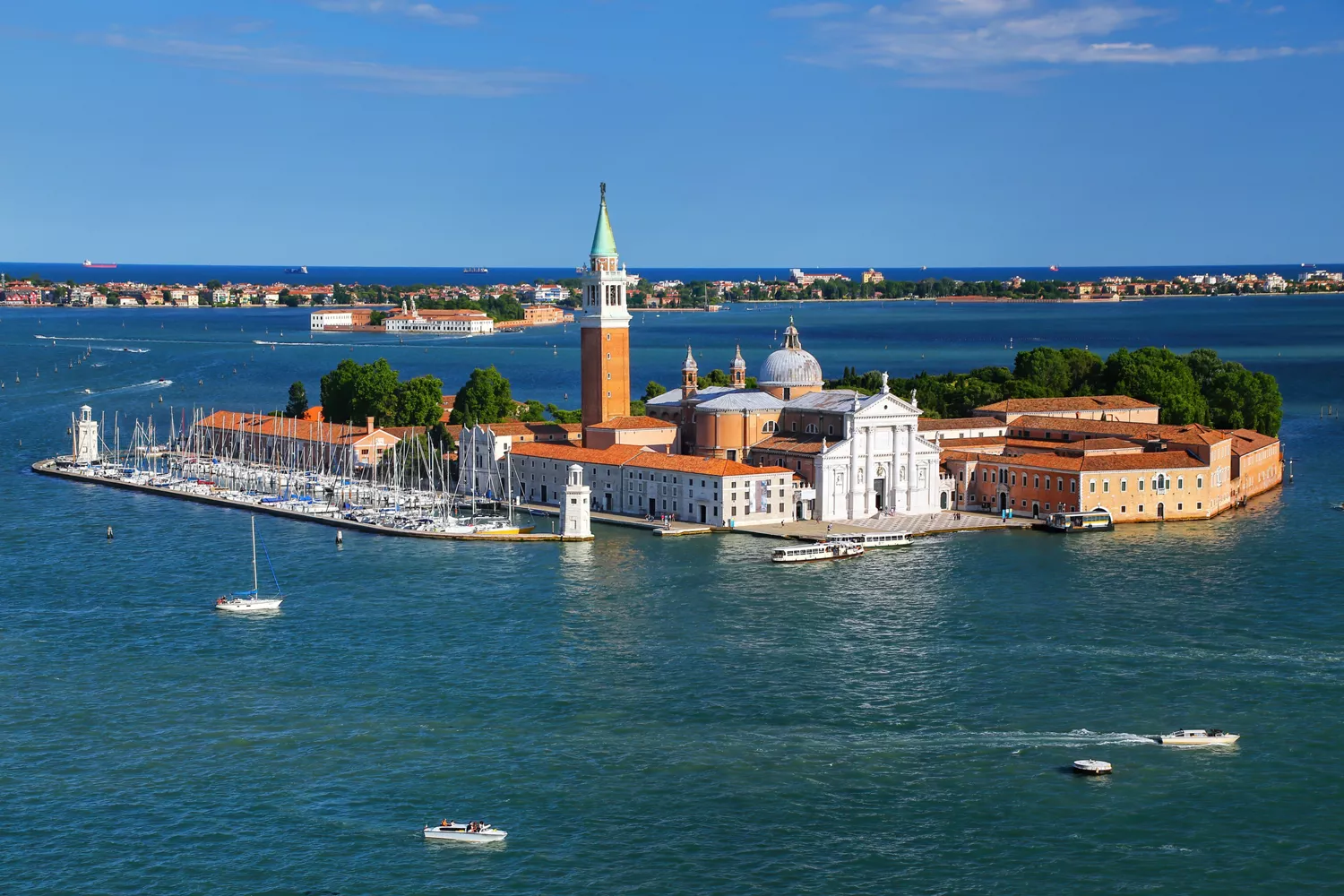
It is one of the silhouettes we see most often in photographs of Venice and, perhaps precisely for that reason, it is easy to forget that San Giorgio Maggiore is a destination to explore, not simply the backdrop to St. Mark’s Square.
The island’s monastic history began to take shape at the end of the 10th century, when Doge Tribuno Memmo entrusted the land to the Benedictine monk Giovanni Morosini. Over the centuries, the monastery acquired considerable cultural and religious importance, while the island’s skyline was ultimately defined by the Basilica of San Giorgio Maggiore, designed by Andrea Palladio. Inside are works by major masters, including Tintoretto.
Today, much of the complex is connected to the Fondazione Giorgio Cini. The ancient Benedictine spaces coexist with libraries, collections, exhibitions, and places devoted to research and contemporary culture. Here you can find Palladio’s cloister and refectory, the Cypress Wood, the exhibition spaces of Le Stanze del Vetro, and the Borges Labyrinth, created as a tribute to the Argentine writer.
San Giorgio therefore offers something rare: the chance to look at Venice from incredibly close by while, at the same time, feeling momentarily removed from it.
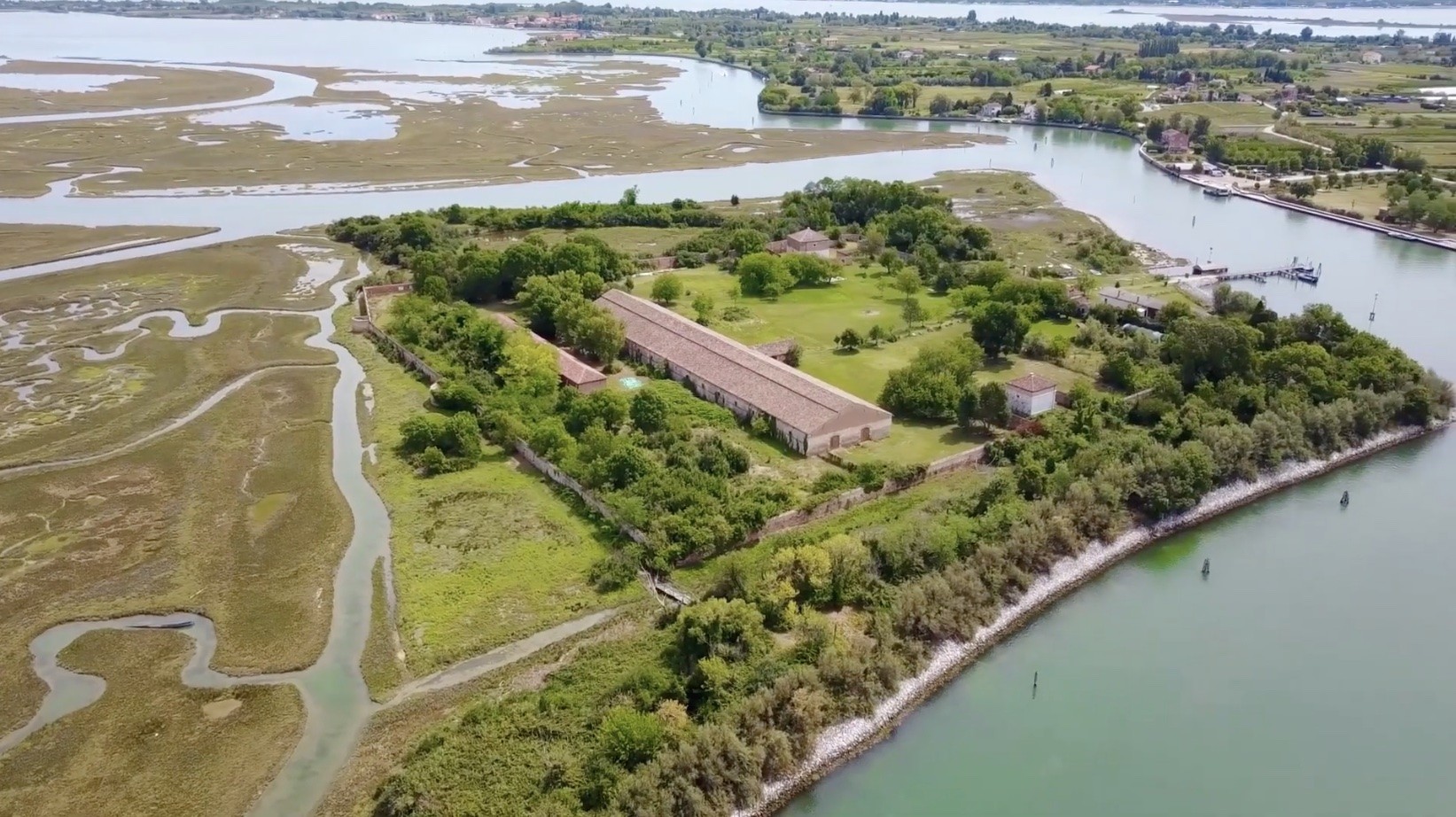
Located near the northern entrance to the Lagoon, Lazzaretto Nuovo covers around nine hectares in an area that was strategically important for controlling the historic waterways leading towards the mainland. Human presence here dates back much further, as archaeological finds reveal, while from the 11th century the island belonged to the Benedictines of San Giorgio Maggiore.
The turning point came in 1468, when the Venetian Senate established a lazaretto here to prevent the spread of disease. Unlike the Lazzaretto Vecchio, which was used for confirmed cases of plague, the Nuovo became a place of preventive isolation for crews, travelers, and goods arriving from areas considered at risk. It was within this public health system that Venice helped establish the structured practice of quarantine, an essential measure for a city whose prosperity depended on trade across the Mediterranean.
As its medical function gradually declined during the 18th century, the island became part of the Lagoon’s military defense system under French and Austrian rule. Used by the Italian Army well into the 20th century, it later underwent an extensive restoration process.
Today, Lazzaretto Nuovo is open to visitors seasonally, bringing together archaeology, medical history, and the natural environment of the Lagoon. Nature itself is part of the experience: the Sentiero delle Barene, or Salt Marsh Trail, offers a close-up view of one of the Lagoon’s most distinctive and fragile ecosystems.
The map of the Lagoon, however, has never stood still.
Alongside islands that are inhabited, restored, or transformed, there are others that have been abandoned and some of which now survive only as traces, shallows, or names preserved in historical records.
Salina, once inhabited, is now primarily a natural area populated by birdlife and periodically reached by the tides. Of ancient Ammiana, once home to important settlements and monasteries before being gradually abandoned during the Middle Ages, what remains today is largely archaeological and historical evidence. And then there is Costanziaca, another settlement in the northern Lagoon that disappeared over time and now survives only through written sources.
These stories help us understand the true nature of this territory.
The Lagoon is an extremely dynamic environment, where sedimentation, erosion, subsidence, tides, and human intervention have continuously reshaped the boundary between land and water. Today, these processes are compounded by the challenge of sea-level rise caused by climate change, making the preservation of Venice’s ecosystem and heritage even more delicate.
Simply saying that “Venice will disappear,” however, risks reducing a far more complex reality to a sense of inevitability. The history of the Lagoon tells a different story, one of centuries of adaptation and intervention to manage a fragile environment. The lost islands are therefore, above all, a reminder: here, the landscape has never been something fixed.
Once you change perspective, one very practical question remains: how do you reach Venice’s lesser-known islands?
There is no single answer and that is precisely what makes planning an itinerary so interesting.
Some islands are integrated into the ACTV public transport network and can be reached by vaporetto; others require specific connections, organized visits, or private boats. San Francesco del Deserto, for example, has no regular direct public transport service and is generally reached from Burano through local operators. Lazzaretto Nuovo, meanwhile, has specific opening periods and visiting arrangements.
For those who want to explore several places in the same day, a private excursion makes it possible to create a tailor-made route. Traditional bragozzi boats, motorboats, water taxis, and vessels of different sizes can reach even less accessible areas, with departure points available both from Venice’s historic center and from other parts of the Lagoon and mainland.
The best advice, then, is not to leave the entire day to chance: checking boat schedules, opening times, and access arrangements in advance makes it easier to choose two or three compatible stops and then leave room for the best part: travelling across the water from one island to the next.
Visiting these islands means changing scale.
Beyond St. Mark’s Square and the Grand Canal, the Lagoon reveals a Venice made up of crops growing in brackish soil, monasteries, Armenian manuscripts, ancient quarantine systems, fortifications, and landscapes where it can be difficult to tell exactly where the land ends and the sea begins.
They are not alternatives to the Venice everyone knows. They are another way of understanding it.
From Move Hotels Venezia Nord, the Lagoon can become the destination for an entire day: reach Venice and, from there, choose a less predictable route, shaping the itinerary around the time available, your interests, and the islands you want to discover.
Because sometimes, to see Venice from a new perspective, all you have to do is go one island further.